

Winterizing & De-Winterizing Your RV
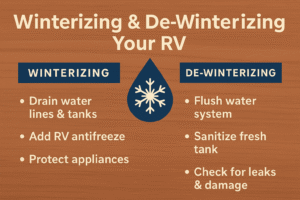
Preparing your RV for winter—whether you store it in a cold climate or you’re returning north after a warm stay at Cape Kennedy RV Resort—is essential to protecting your plumbing, appliances, and interior systems. Even though Florida stays warm year-round, many of our guests travel from colder states where freezing temperatures can cause significant damage to an RV. Understanding how to winterize and de-winterize properly ensures your rig stays in top shape, no matter the season.
Winterizing an RV starts with draining all water out of the plumbing system. Water expands when frozen, and even a small amount left in a line, valve, or fitting can cause cracking. To avoid costly repairs, the first step is to empty the fresh tank, water heater, and both grey and black holding tanks. Many RVers forget the water heater, but it must be fully drained before adding any antifreeze to the system.
After draining the water, the next step is to blow out the lines or pump RV antifreeze through the plumbing. Using compressed air helps remove remaining moisture, but many owners prefer using non-toxic RV antifreeze because it provides an extra layer of freeze protection. Antifreeze is pumped through all faucets, the toilet, and exterior showers until the pink fluid flows steadily, ensuring every line is protected from freezing.
Winterizing also includes protecting appliances. Your water heater should be switched into bypass mode so that antifreeze doesn’t fill the tank. Refrigerators, ice makers, and washing machines require their own procedures depending on the model. Taking a few extra minutes to check your owner’s manual ensures you don’t accidentally overlook an appliance that could freeze.
Interior preparation is equally important. Winterizing protects more than just plumbing—it also helps prevent humidity problems, pests, and stale odors. Cleaning the interior thoroughly, removing food, opening cabinets, and placing moisture absorbers all help keep your RV fresh while it’s in storage. Many RVers also leave cabinet doors open to allow airflow, reducing the chance of mold.
Exterior preparation includes sealing vents, protecting slide-out seals, and ensuring your roof is watertight. Winter snow and ice can cause water intrusion if seals are damaged or worn. Inspecting and resealing before winter storage prevents surprises when spring comes. Lubricating locks, hinges, and stabilizers also keeps everything operating smoothly after months of inactivity.
De-winterizing your RV in spring is the reverse process—but just as important. The first step is to flush all antifreeze out of the plumbing system. This is done by reconnecting to a water source, turning on all faucets, and running water until it’s clear. The water heater should be reconnected from bypass mode, and the fresh tank should be sanitized before drinking water is used.
Sanitizing your freshwater system removes any bacteria that may have developed while the RV was stored. A diluted bleach solution is added to the fresh tank, pumped through all lines, and flushed out after several hours. This ensures that sinks, showers, and water lines are safe and ready for travel.
Once the plumbing is ready, it’s time to inspect appliances. Your water heater, refrigerator, furnace, and air conditioner should all be tested individually. De-winterizing is the perfect time to change filters, check propane connections, and test detectors such as CO and smoke alarms. Ensuring everything works before your first trip prevents breakdowns on the road.
Spring is also the ideal time to check tires, batteries, and seals. Tires often lose pressure during storage and should be properly inflated and inspected for cracks. Batteries should be fully recharged, terminals cleaned, and connections tightened. Exterior seals should be examined for drying or cracking after winter weather exposure.
Interior cleaning during de-winterizing helps freshen the RV and remove any stale air that built up during storage. Opening windows, washing bedding, and wiping down surfaces prepares the RV for another season of comfortable travel. It’s also a good time to look for signs of pests or moisture issues that may have developed over winter.
While Florida RVers at Cape Kennedy RV Resort enjoy warm weather all year, winterizing and de-winterizing are essential for anyone who travels to or from colder climates. Taking the time to prepare your RV properly protects your plumbing, appliances, and structural components, ultimately saving you money and frustration. With a well-maintained RV, you’re always ready for your next adventure—whether you’re chasing sunshine, exploring the Space Coast, or heading north for the summer.
📍1880 Williams Rd, FL
For any questions or concerns please reach out to us
📞 (863) 675-0006