

RV Slideout Maintenance & What Causes Slide Failures
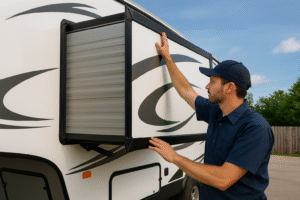
Slideouts are one of the best features in modern RVs. They instantly expand your living space, make your RV feel more like home, and provide the comfort guests appreciate during long stays at Cape Kennedy RV Resort. But like any moving mechanical system, slideouts require regular maintenance to operate smoothly and avoid costly failures. Understanding how they work—and what causes them to malfunction—helps keep your RV safe, functional, and travel-ready.
Slideouts come in several configurations, including electric gear-driven systems, hydraulic systems, cable-driven systems, and Schwintek track systems. Each has its own strengths and maintenance needs, but all slideouts share one truth: they must move evenly and with minimal resistance to extend and retract properly. The moment friction, debris, or misalignment appears, problems can follow.
One of the most common causes of slideout issues is lack of lubrication. Slide mechanisms rely on rollers, gears, and rails that move heavy loads. If these components run dry, they wear down prematurely or begin to bind. Regularly lubricating rails, rollers, and seals ensures smooth operation and prevents the motor or hydraulic pump from straining. Using the correct slide-specific lubricants is key—automotive oils or WD-40 can attract dirt and cause more harm than good.
Debris buildup is another major cause of slide failures. Leaves, sand, sticks, and even acorns can become trapped under the slide floor or inside the seals. When the slide extends or retracts, debris creates resistance that can damage the motor or distort the slide structure. At a resort like Cape Kennedy, where trees and coastal winds can deposit debris around campsites, checking for obstructions before operating your slide is an essential habit.
Slide seals are your first defense against water intrusion and wind. These rubber seals must remain soft, flexible, and properly seated. Over time, UV exposure and Florida heat can dry them out, causing cracks or gaps that allow moisture inside the RV. Conditioning your slide seals helps prevent leaks, mold, and interior wall damage, especially during Florida’s rainy afternoons.
Electrical issues also lead to slideout failures. Weak batteries, poor wiring connections, or faulty switches prevent slides from receiving enough power to operate. Many RVers don’t realize that slides draw a significant amount of current. Even when plugged in, a low battery can cause slow or uneven movement. Keeping your batteries charged and checking wiring connections ensures the motor receives consistent power.
Hydraulic slide failures often stem from low fluid levels or leaks. A hydraulic system depends on pressure to move one or more slides simultaneously. If fluid is low, the slide may move slowly, shudder, or stop halfway. Leaks can appear at hoses, fittings, or the pump assembly. Regular inspections help catch these issues early before they create major malfunctions.
Misalignment is another frequent culprit. Slideouts must move squarely along their tracks. If a track bends, a gear becomes worn, or the RV frame shifts slightly over time, the slide may drag, grind, or extend unevenly. Misalignment causes visible gaps, grinding noises, or one side moving faster than the other. Left unaddressed, this can lead to structural damage that becomes extremely expensive to repair.
Overloading the slide room can also cause failures. Slide floors and mechanisms are designed to support specific weight limits. Heavy furniture, storage items, or remodeling additions can strain the system and lead to sagging or mechanical stress. Keeping your slide area uncluttered and avoiding unnecessary weight helps protect the mechanism.
Water intrusion and corrosion are major threats as well. Moisture can rust metal parts, weaken rollers, or damage electrical connections. This is especially important for RVs spending time near Florida’s coast, where humidity and salt air accelerate corrosion. Periodic cleaning and protective sprays help shield components from moisture damage.
Operator habits also affect slide lifespan. Extending slides without stabilizing your RV first can twist the frame. Running slides on an uneven surface increases strain. Holding the switch after the slide reaches full extension or retraction can burn out the motor. Small habits—like leveling first, holding the button only until movement stops, and checking surroundings—greatly reduce wear.
Routine inspections are the key to preventing sudden slide failures. Look for uneven gaps, slow movement, unusual sounds, or visible wear. Listen to the motor—straining or clicking indicates resistance. A quick visual check each month helps prevent unexpected breakdowns during travel or while enjoying a stay at Cape Kennedy RV Resort.
By understanding what causes slideouts to fail and performing simple preventive maintenance, you protect one of the most valuable systems in your RV. Smooth-operating slides make your space more comfortable, your travels more enjoyable, and your RV safer. With a little routine care, your slideouts will continue working perfectly whether you’re parked by the water, watching rocket launches, or exploring Florida’s Space Coast.
📍1880 Williams Rd, FL
For any questions or concerns please reach out to us
📞 (863) 675-0006