

RV Refrigerator Operation & Maintenance
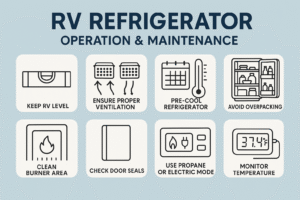
Your RV refrigerator is one of the most important appliances in your rig—especially during long stays in warm climates like Florida’s Space Coast. Whether you’re parked for the season at Cape Kennedy RV Resort or traveling cross-country, understanding how your RV fridge works and how to maintain it helps ensure your food stays cold, your system runs efficiently, and you avoid costly breakdowns.
RV refrigerators operate very differently from residential fridges. Most traditional RV fridges use absorption technology rather than compressors. Instead of relying on moving parts, they use a combination of heat, ammonia, hydrogen gas, and water to create a cooling cycle. This design makes them reliable and quiet, but also more sensitive to leveling, ventilation, and heat.
One of the most important rules for operating an absorption refrigerator is keeping your RV level. When a rig leans too far in any direction, the cooling fluids cannot circulate properly through the coils. Over time, this can cause overheating, blockages, or permanent damage to the cooling unit. This is why parking level at Cape Kennedy RV Resort—or anywhere—isn’t just about comfort; it helps protect your fridge.
Ventilation is another essential factor. Absorption refrigerators release heat through the back of the unit, requiring proper airflow to operate efficiently. When the outside temperature is warm, such as Florida’s summer afternoons, poor ventilation can cause your fridge to struggle or run continuously. Keeping the exterior fridge vents clear of debris and ensuring airflow helps maintain stable internal temperatures.
Your RV refrigerator works best when it’s pre-cooled before loading food. Turning it on 12–24 hours before a trip or restocking allows the unit to reach ideal temperature ranges—typically between 34°F and 40°F in the fridge and 0°F in the freezer. Loading warm food quickly raises internal temperature, so starting with a pre-chilled interior keeps your system from working too hard.
Avoid overpacking your fridge. Absorption refrigerators rely on natural air circulation inside the compartment. If food is packed too tightly, cold air can’t circulate, causing warm spots and inconsistent cooling. Using small fridge fans helps move air throughout the compartment, improving performance and reducing cooling times in humid climates like Cape Kennedy’s coastal environment.
Door discipline is especially important with RV refrigerators. Because absorption fridges cool slowly, leaving the door open for even a few moments can cause temperatures to climb rapidly. Opening the door quickly and minimizing how often you check inside helps maintain efficiency—particularly useful during Florida’s warm weather.
Routine maintenance is essential to long-term fridge performance. Cleaning the burner area (for propane operation), vacuuming the rear coils, and clearing dust from the exterior vents all improve cooling efficiency. Regular inspections ensure that insects, dirt, or corrosion haven’t restricted airflow. A clean, well-ventilated refrigerator functions better and lasts longer.
Checking and replacing door seals is another important maintenance step. If the seals are cracked, stiff, or not closing tightly, warm air can seep inside. This forces the fridge to work harder, which can shorten its lifespan. Running a dollar bill test—closing the bill in the door and checking resistance—is a simple way to determine whether seals need replacement.
If your RV refrigerator offers both propane and electric modes, understanding when to use each can improve overall efficiency. While many guests at Cape Kennedy RV Resort prefer electric mode while on full hookups, propane mode can cool more effectively during travel or in extremely hot conditions. Knowing how your specific unit performs in different environments helps prevent temperature loss.
Monitoring the temperature inside your fridge is one of the easiest ways to stay ahead of problems. Small digital thermometers provide quick, accurate readings. If you notice your fridge climbing above safe temperatures, it’s often a sign of poor ventilation, leveling issues, or overloading. Identifying these signs early prevents spoilage and bigger mechanical failures.
Many RVers also upgrade their refrigerator fans or install auxiliary cooling fans behind the unit for better airflow on hot days. These simple additions improve circulation and help absorption fridges operate more efficiently in warm regions—making them especially helpful for long-term guests staying at Cape Kennedy RV Resort.
By understanding how your RV refrigerator works and performing simple routine maintenance, you can keep your food fresh, extend the life of your appliances, and reduce energy use. At Cape Kennedy RV Resort, where warm weather and sunny skies are part of everyday life, good refrigerator habits ensure a smooth, comfortable, and enjoyable stay all year long.
📍1880 Williams Rd, FL
For any questions or concerns please reach out to us
📞 (863) 675-0006