

RV Fire Safety: Extinguishers, Detectors & Safe Cooking Practices
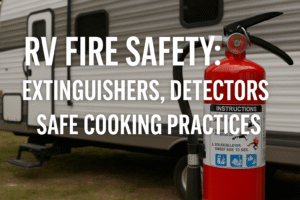
Fire safety is one of the most important aspects of RV ownership, yet it’s often overlooked until something goes wrong. Whether you’re parked long-term at Cape Kennedy RV Resort or traveling across the country, understanding how to prevent fires—and how to respond if one occurs—can make all the difference. RVs combine electrical systems, propane appliances, tight spaces, and flammable materials, which means taking fire safety seriously is essential for protecting both your family and your rig.
The first line of defense in any RV is a properly rated fire extinguisher. Every RV comes with one, but not all extinguishers are equal. Most factory-installed units are basic dry-chemical extinguishers located near the entry door. RVers should ideally carry multiple extinguishers: one by the entrance, one near the bedroom, and one accessible from outside the RV near the kitchen or grill area. Having several extinguishers placed within easy reach ensures you can respond quickly if something happens.
Equally important is ensuring your extinguishers are in working condition. Over time, they can lose pressure or become damaged. Check gauges regularly, shake dry-chemical extinguishers to prevent settling, and replace them immediately if they show signs of wear. Having the right extinguisher available—and knowing how to use it—significantly increases your ability to stop small fires before they spread.
Smoke detectors play a major role in fire safety. RVs are compact, and fires can spread fast, giving you less time to react than in a traditional home. Every RV should have at least one smoke detector, and many benefit from additional units in bedrooms or living areas. Test your smoke detectors monthly and replace batteries at least twice a year. A working smoke detector is often the quickest warning you’ll get in an emergency.
Carbon monoxide (CO) detectors and propane leak detectors are just as critical. RVs frequently use propane for stoves, furnaces, refrigerators, and water heaters. A leak can lead to both fire risks and dangerous CO buildup. Propane detectors, usually located near the floor, alert you to leaks immediately. CO detectors, usually mounted higher, warn you of dangerous fumes from malfunctioning appliances. Both should be tested regularly and replaced according to manufacturer guidelines.
Safe cooking practices are one of the most effective ways to prevent fires. Most RV fires begin in the kitchen area due to unattended cooking, grease flare-ups, or malfunctioning appliances. Whenever you cook inside, stay in the kitchen until you’re finished. Avoid leaving pans unattended, and keep flammable items—like paper towels, oven mitts, and cooking spray—well away from open flames or hot surfaces.
Ventilation is also important when cooking in an RV. Turn on your range hood or crack a window to prevent heat and smoke buildup. Proper ventilation helps prevent your smoke detector from triggering unnecessarily while reducing the heat load on your RV. In humid environments like Cape Kennedy RV Resort, ventilation also helps minimize moisture accumulation that can lead to mold or poor appliance performance.
Many RVers enjoy cooking outdoors, which is a great way to reduce heat and smells inside the rig. But outdoor cooking comes with its own safety considerations. Keep grills and propane stoves at least three feet away from the RV, and never cook under your awning. A sudden flare-up can melt fabric, damage hardware, or start a fire. Ensure your propane connections are tight, and never leave outdoor cooking equipment unattended.
Electrical safety is another major component of fire prevention. Overloaded outlets, aging wiring, or faulty appliances can quickly lead to overheating. Always use RV-rated power cords, avoid daisy-chaining extension cords, and check your outlets for warmth after extended use. If an outlet feels hot, stop using it immediately and address the problem before it escalates.
Space heaters require special caution as well. While convenient, they can easily tip over or overheat if not used properly. Only use heaters with automatic tip-over and overheat protection, keep them on stable surfaces, and maintain a clear three-foot safety zone around them. Never leave a space heater running while you sleep or when you’re away from the RV.
Fire escape planning is often overlooked in RVs, but it’s incredibly important. Know how to open emergency exit windows and ensure they are not blocked. Practice your escape route, especially if children or guests stay with you. A fire can spread through an RV in seconds, so having a plan—and being able to execute it quickly—can save lives.
By staying vigilant, maintaining your equipment, and practicing safe habits, you dramatically reduce the risk of fire in your RV. At Cape Kennedy RV Resort, we want every guest to enjoy a relaxing, worry-free stay on the Space Coast. A few simple precautions help protect your loved ones, your RV, and the beautiful campground around you. Fire safety isn’t complicated—but it is essential.
📍1880 Williams Rd, FL
For any questions or concerns please reach out to us
📞 (863) 675-0006