

RV Driving for Beginners: How to Handle Turns, Hills, and Tight Roads Safely
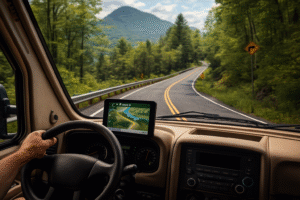
Learning to drive an RV for the first time can feel intimidating, especially if you’re used to the size and maneuverability of a standard car. But RV driving is a skill that improves quickly with the right techniques and a focus on safety. Whether you’re heading to Meadowlark Shores RV Resort or setting out for a long cross-country journey, understanding how to handle turns, hills, and tight roads will help you feel more confident and in control.
Driving an RV is less about speed and more about awareness. RVers must think ahead—watching for traffic patterns, road width, upcoming obstacles, and changing conditions. This anticipation gives you more time to brake, adjust, and navigate smoothly. While the size of an RV might seem intimidating at first, most new drivers find that with a few miles of practice, handling the rig becomes much more natural.
Turning safely is one of the biggest learning curves. RVs—especially those towing trailers—don’t pivot the same way as cars. Wider turns are essential, and the key is pulling forward farther before angling into a turn. This prevents the trailer or rear wheels from cutting corners too sharply or hitting curbs, signs, or obstacles. Watching your rear wheels in the side mirrors helps you track where the rig is actually going, not just where the front is pointed.
Right turns require the most care, as RVs tend to cut inward on the passenger side. Slowing down more than you think you need to and swinging slightly wider gives the rear wheels the space they need. Taking turns slowly isn’t a sign of inexperience—it’s a sign of a smart, cautious RV driver.
Left turns are easier but still require attention. RVs accelerate slower than cars, so make sure the intersection is completely clear before committing. Giving yourself an extra few seconds of buffer helps avoid feeling rushed or pressured by oncoming traffic.
Driving up or down hills in an RV takes practice too. Climbing steep grades often requires shifting into a lower gear to avoid overworking the engine. Slowing slightly before the hill reduces stress on the drivetrain and allows smoother ascent. On long uphill stretches, watching temperature gauges is important—heat can build quickly in engines and transmissions.
Descending hills demands even more caution. Letting gravity take over can cause your RV to pick up speed fast, leading to overheated brakes. The safest technique is to downshift early, using engine braking to control speed while applying the brakes gently and intermittently. This reduces brake wear and keeps the RV stable.
Tight roads are another challenge for beginners. Narrow lanes, winding curves, and unexpected obstacles can create nervous moments. Slowing down gives you more control, and keeping your eyes far ahead rather than fixated on the immediate road helps you steer smoothly. Using your mirrors constantly—checking every few seconds—keeps you aware of lane position and clearance.
When driving through small towns, campgrounds, or rural backroads, watch for low-hanging branches, tight turns, and uneven shoulders. RVs need more space than most local roads account for, so staying centered, moving slowly, and avoiding sudden steering corrections keeps the rig stable.
One helpful tip for all new RV drivers is practicing in an empty parking lot before heading out. The space gives you room to experiment with turns, backing up, and navigating tight corners without pressure. Practicing with cones or small markers simulates campground turns and tight maneuvers.
Over time, RV driving becomes second nature. Confidence comes from understanding your RV’s size, responding calmly to changing conditions, and never rushing decisions. With patience and practice, even the most inexperienced drivers can travel safely and enjoy the freedom the RV lifestyle offers.
📍1880 Williams Rd, FL
For any questions or concerns please reach out to us
📞 (863) 675-0006