

Hurricane Season Prep: How to Protect Your RV in Coastal Florida
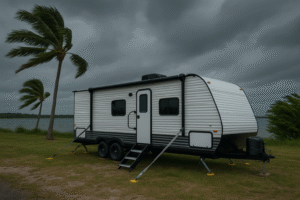
Hurricane season in coastal Florida brings unique challenges for RV owners, especially those staying near waterfront locations like Meadowlark Shores RV Resort. Preparing your RV properly can make the difference between minor inconvenience and major damage. Understanding the right steps ahead of time ensures safety, protects your investment, and gives you peace of mind during severe weather.
The first step in hurricane preparation is staying informed. Florida storms can develop quickly, and forecasts change by the hour. Every RVer should monitor local weather alerts, set up mobile warnings, and stay tuned to official updates from county emergency management. Awareness provides crucial response time.
Your RV’s location matters. If evacuation is recommended, always prioritize personal safety over property. Towable RVs should be relocated inland whenever possible, while motorhomes should be moved away from potential flood zones and falling tree hazards. Low-lying coastal areas can flood within minutes during heavy rainfall or storm surge.
For RVs that cannot be moved, secure anchoring becomes vital. Tie-down straps, wheel chocks, and stabilizer jacks help reduce movement, but they are not substitutes for relocation. Placing boards or leveling blocks under tires can reduce sinking in wet ground and help stabilize the rig during high winds.
Removing exterior accessories is another essential step. Awnings, chairs, grills, flags, patio mats, umbrellas, and loose décor can become dangerous projectiles in hurricane-force winds. Retract and lock awnings, fold antennas, and secure slide-outs. Anything lightweight should be stored inside the RV.
Windows and roof components are especially vulnerable. Check all seals, gaskets, and caulking for cracks or gaps. High winds and driving rain can force water into even small openings. Vent covers, skylights, and roof seams should be inspected before storm season and resealed as needed.
Freshwater and waste systems also need attention. Emptying your black and gray tanks before a storm helps reduce weight and prevents sewage backup if local systems flood. Filling your freshwater tank partially can help add weight to stabilize the RV, but avoid overfilling to prevent unnecessary strain.
Power management is another critical part of hurricane prep. Disconnecting shore power during a storm prevents electrical surges. Generators should be stored securely, with extra fuel kept in approved containers away from ignition sources. Surge protectors and EMS systems are helpful year-round but cannot replace physically unplugging during severe weather.
Interior preparation is equally important. Securing cabinet doors, removing heavy items from high shelves, and ensuring appliances are locked can prevent interior damage. Anything that can fall, slide, or break should be stored low or placed on the floor.
Insurance readiness is a step many RV owners overlook. Photographing your RV inside and out, noting VIN numbers, and reviewing your policy ensures you are covered for wind, flooding, and debris damage. Comprehensive policies typically cover storms, but it’s essential to verify details before hurricane season arrives.
After the storm passes, safety checks are crucial. Downed power lines, contaminated water, and unstable trees may pose hazards even when the weather is calm. Inspect your RV for roof punctures, water leaks, bent frames, damaged slide seals, or tire issues caused by debris.
By understanding hurricane risks and preparing early, RVers can minimize damage and keep their families safe during Florida’s most unpredictable weather. Proper storm preparation ensures your RV is ready to withstand the elements and return to peaceful, sunny days at Meadowlark Shores RV Resort—where waterfront living truly shines once the skies clear.
📍1880 Williams Rd, FL
For any questions or concerns please reach out to us
📞 (863) 675-0006