

How to Keep Your RV Cool When Parked in Full Sun
Parking your RV in full sun can quickly turn your living space into a sauna—especially in warm destinations like the Space Coast. Whether you’re staying at Cape Kennedy RV Resort for a weekend or the entire season, high heat and direct sunlight can challenge even the best RV air conditioners. Fortunately, a combination of smart shading, airflow techniques, and insulation strategies can dramatically improve your cooling efficiency and keep your RV comfortable all day long.
Understanding how heat enters your RV is the first step. Most heat comes through your roof, windows, and slideouts. Even a well-insulated RV absorbs heat like a greenhouse when exposed to direct sunlight. The key is reducing heat gain before your air conditioner has to fight it. Every degree of heat you block outside keeps your RV cooler inside.
One of the most effective strategies is to block sunlight before it reaches the glass. Reflective window shades, reflective bubble insulation (like Reflectix), or blackout curtains significantly reduce heat transfer. Using these in your front windshield, large side windows, and any west-facing windows keeps solar heat from flooding the interior.
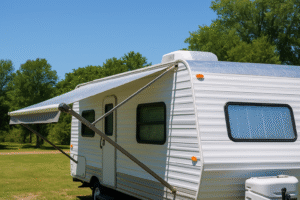
Your RV awning can also help. Extending it on the sunny side of your RV can shade large window sections and cool your entry door area. Just be mindful of wind, especially in Florida—if the breeze picks up, retract the awning immediately to avoid damage. Shade tarps or sun blockers attached to the awning add even more protection.
Roof heat is another major contributor. Roof-mounted AC units work overtime when the roof is absorbing full sun. Reflective roof treatments, UV-protective coatings, and even temporary rooftop sunshades can reduce roof temperature dramatically. Keeping your roof clean also improves heat reflection and extends its lifespan.
Inside your RV, airflow is essential. Hot air rises, and without proper circulation, your AC alone can’t cool the entire interior effectively. Running multiple fans—ceiling fans, portable oscillating fans, or vent fans—helps move cold air into warm spots and push hot air up and out. Even small portable fans make a big difference in overall comfort.
Vent pillows are an inexpensive and highly effective cooling tool. Inserted into ceiling vents or skylights, they block heat from radiating downward. This is especially useful in bathrooms, above showers, or under large skylights that can get extremely hot during the day. Combined with reflective window covers, vent pillows dramatically reduce indoor heat.
Another trick is lowering humidity. High humidity makes your RV feel hotter than the thermostat shows. Using a small dehumidifier or running the bathroom vent after showers removes moisture from the air so your AC can cool more efficiently. Florida’s coastal humidity makes this step particularly useful for Cape Kennedy RV Resort guests.
Strategic cooking also affects interior temperature. Using outdoor grills, slow cookers, or air fryers avoids filling the RV with heat from ovens or stovetops. Cooking indoors during peak heat hours adds extra strain to your AC. Preparing meals early or cooking outdoors helps keep temperatures more stable indoors.
Your AC system performs best when it’s clean and well-maintained. Cleaning filters monthly, clearing debris from roof coils, and ensuring vents are not blocked all improve cooling efficiency. Running your AC before the RV heats up—starting in the morning—helps maintain a comfortable temperature throughout the day instead of trying to cool an already overheated interior.
Parking direction also helps. When possible, aim your windshield toward the east so the majority of sun hits the front of your RV in the morning rather than the afternoon. Afternoon sun is significantly stronger, and minimizing west-facing exposure keeps your RV cooler during the hottest part of the day.
Insulation upgrades provide long-term cooling benefits. Foam board under the bed, insulated window covers, upgraded weather stripping, or reflective interior barriers help prevent heat infiltration. Even adding rugs on laminate floors helps reduce radiant heat from the underbelly, especially on older rigs.
Finally, remember that every little bit helps. Combining shading, insulation, airflow, and proper AC maintenance produces the biggest cooling improvements. At Cape Kennedy RV Resort, these strategies keep guests comfortable even on Florida’s sunniest afternoons, helping your RV stay cool, livable, and refreshing no matter how bright the sun gets.
📍1880 Williams Rd, FL
For any questions or concerns please reach out to us
📞 (863) 675-0006