

How to Back In Safely (With or Without a Spotter)
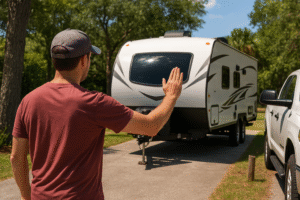
Backing an RV into a campsite is one of the most intimidating parts of RVing—especially for new travelers. But with the right techniques, a calm mindset, and a little preparation, backing in becomes much easier and far less stressful. At Cape Kennedy RV Resort, many guests arrive with a mix of excitement and nerves, and backing their RV into the site is often the first challenge they face. Learning how to position your rig safely, whether you have a spotter or you’re working solo, ensures a smooth start to your stay.
The key to backing in safely begins before you put the RV in reverse. Start with a full site assessment. Take a moment to step out of your vehicle, walk the site, and look for low branches, posts, firepits, or utility pedestals. Identify the best angle of approach, the slope of the ground, and any obstacles you’ll need to avoid. This quick walkthrough saves time and prevents surprises once you begin backing.
Next, set yourself up for success by approaching the site slowly and positioning your tow vehicle or motorhome at the correct angle. In most cases, the best technique is the “S-turn”: pull forward past your site so your rear wheels line up just beyond the site entrance, then turn away from the site before sweeping back toward it. This creates the ideal pivot angle for backing in smoothly.
If you have a spotter, clear communication is essential. Before you move the RV an inch, establish simple, visible hand signals that both of you understand. Avoid yelling or using vague gestures. The spotter should stay visible in your mirror at all times—never directly behind the RV—and should guide you slowly, clearly, and confidently. Using walkie-talkies or a phone on speaker helps keep communication steady.
With a spotter, patience is your best tool. Move slowly, check mirrors frequently, and stop whenever you’re unsure. A good spotter will let you know when you need to adjust, how much space you have, and when to straighten out. Calm teamwork makes the backing process smoother and helps prevent frustration.
Backing in without a spotter requires a little extra attention, but it can be done safely with the right strategy. First, rely heavily on your mirrors—both the wide-angle and standard ones. Adjust them before backing so you can see as much of your trailer, tires, and campsite boundaries as possible. Never rush a solo back-in. Small adjustments are much easier to correct than large ones.
Technology can help, too. Many RVers use backup cameras, wireless observation systems, or smartphone camera setups to monitor blind spots. While no camera replaces careful mirror checking, these tools provide additional visibility when working alone. Some RVers even place bright markers or cones at key points to help guide their path into the site.
The “pull-forward and reset” technique is especially important when backing in solo. If your angle doesn’t feel right or you start drifting, simply pull forward, realign, and try again. There is no shame in correcting your approach—it’s a sign of experience, not inexperience. Often, two or three adjustments result in a perfectly centered, well-positioned RV.
Another key safety tip: keep your steering slow and deliberate. RVs respond gradually to steering inputs when in reverse, and quick movements often lead to overcorrections. Small, steady adjustments give you more control and reduce the chance of drifting into obstacles or utility connections.
Always remain aware of your surroundings. Pedestrians, pets, and golf carts can appear suddenly. At Cape Kennedy RV Resort, guests often walk or bike around the property, so backing slowly and checking mirrors often helps keep everyone safe. If someone stops to watch or offer help, stay focused and maintain control of the situation.
Once you’re lined up inside the site, straighten out by slowly backing until both sides of the RV are parallel to the site pad. Stop, set your parking brake, and step out to confirm your position. Check that you have enough room for slideouts, awnings, and utility connections. Many RVers do a final adjustment to center their rig perfectly.
Backing in safely is a skill that improves with practice, patience, and confidence. Whether you use a spotter or handle the task solo, approaching it slowly and methodically sets you up for success. At Cape Kennedy RV Resort, we want every arrival to feel calm and welcoming—and mastering your back-in technique ensures a smooth start to your stay on Florida’s beautiful Space Coast.
📍1880 Williams Rd, FL
For any questions or concerns please reach out to us
📞 (863) 675-0006