

Generator Use: Fuel, Ventilation & Runtime Rules
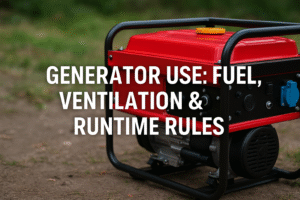
Generators are incredibly useful for RV owners, especially when boondocking, traveling, or powering appliances during brief outages. Even though Cape Kennedy RV Resort provides full hookups at every site, many guests travel with generators for convenience, emergencies, or road-trip reliability. Understanding how to use your generator safely—including fuel handling, ventilation needs, and proper runtime etiquette—is essential for preventing accidents, protecting your equipment, and being a considerate neighbor.
The first key to safe generator operation is choosing the correct fuel type and storage method. Most RV generators run on gasoline, diesel, or propane depending on the model. Each fuel type has specific storage requirements. Gasoline should be kept in approved, tightly sealed containers and stored away from heat sources. Diesel is more stable but still must be stored safely. Propane tanks must remain secured and upright at all times. Keeping fuel fresh and stabilized also prevents starting and performance issues.
Before starting your generator, check fuel levels, oil, and filters. Running a generator low on oil can cause overheating and internal damage. Most onboard generators have safety shutoff mechanisms, but portable units may not. Regularly inspecting oil levels, replacing air filters, and running the generator monthly keeps it reliable and ready when you need it.
One of the most critical factors in generator safety is proper ventilation. Generators produce carbon monoxide (CO), a deadly gas that is both colorless and odorless. CO can accumulate quickly around RVs if a generator is run too close to windows, doors, slide-outs, or vents. Always position portable generators downwind and away from the RV. Never run a generator inside a shed, under an awning, or in an enclosed area. Even outdoor setups need ample airflow for safe operation.
Every RV should be equipped with a working carbon monoxide detector, and batteries should be checked regularly. CO detectors are often the only warning sign of a ventilation issue. If your detector ever alarms, shut off your generator immediately, ventilate the RV, and do not restart the generator until the cause is identified. At Cape Kennedy RV Resort, where warm weather encourages open windows, CO monitoring is especially important.
Managing runtime rules is another major part of generator use. When traveling or boondocking, generators can run for hours at a time, powering air conditioners, microwaves, or other appliances. However, running a generator continuously without breaks can cause overheating and premature wear. Most manufacturers recommend running generators in cycles—allowing them to rest periodically and cool down.
In campgrounds, generator runtime guidelines help promote courtesy and protect the peaceful atmosphere. While Cape Kennedy RV Resort provides full hookups and does not require generator use, many public lands and boondocking areas have designated quiet hours. Understanding and respecting these rules—usually evening and overnight hours—helps maintain harmony between campers. Even when noise isn’t a concern, exhaust fumes can drift, making rude or improper placement a potential nuisance.
Noise level is another important consideration. Modern generators are quieter than older models, but placement still matters. Position your generator on level, stable ground and use anti-vibration pads when possible. Directing the exhaust and noise output away from neighboring sites prevents disturbances and helps maintain a friendly campground environment.
When connecting your RV to a generator, always use the proper power cords and surge protection. Overloading a generator can trip breakers, damage electronics, or cause overheating. Know your generator’s wattage limits and avoid running multiple high-demand appliances at the same time. An EMS (Electrical Management System) adds an extra layer of protection, especially during heavy draw periods like running air conditioning.
Fueling safety is essential. Never refuel a generator while it is running or still hot—gasoline vapors can ignite instantly. Allow the generator to cool for at least 10–15 minutes before adding fuel. Keep all fuel containers far from ignition sources, and always store them outside the RV’s living space. Simple fueling precautions significantly reduce fire risks.
Routine cleaning and maintenance greatly extend the life of your generator. Dust, sand, and salt air—very common near Cape Kennedy—can clog filters and reduce cooling efficiency. Wiping down exterior surfaces, checking vents, and cleaning spark arrestors help keep your generator running smoothly. Following the manufacturer’s maintenance schedule ensures reliability during long road trips or sudden power needs.
Generators also benefit from periodic load testing. Running them under actual electrical load helps keep internal components lubricated and prevents carbon buildup. Even if you rarely use your generator at Cape Kennedy RV Resort, running it under load once a month keeps it ready for the road.
Safe and responsible generator use protects your RV, your fellow campers, and the resort environment. By managing fuel properly, ensuring ventilation, following runtime guidelines, and practicing courtesy, you’ll keep your generator operating efficiently and safely. These simple habits give you peace of mind whether you’re exploring the Space Coast, heading out on a long road trip, or preparing for unexpected power needs.
📍1880 Williams Rd, FL
For any questions or concerns please reach out to us
📞 (863) 675-0006