

What Every RVer Should Know About Tire Blowouts & Emergency Handling
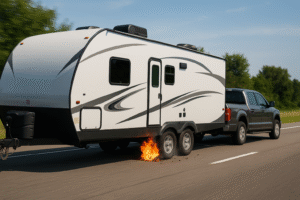
A tire blowout is one of the most dangerous situations an RVer can face, especially at highway speeds. Understanding what causes blowouts—and how to react in those critical first seconds—can make the difference between a controlled recovery and a serious accident. Knowing these essentials helps RVers arrive safely at beautiful destinations like Meadowlark Shores RV Resort.
Many blowouts occur long before the tire actually fails. Underinflation is the leading cause, because low pressure makes tires overheat, flex excessively, and break down internally. Even a few PSI below the recommended level can dramatically increase risk, especially in Florida’s hot climate.
Overloading is another major factor. When an RV or tow vehicle exceeds its axle weight rating, tires carry more load than they were designed for. This excess weight builds heat quickly and weakens the tire’s structure. Proper weight distribution and routine weigh-ins are essential for safety.
Aging tires also contribute to blowouts. RV tires often fail from age long before the tread wears out. Sun exposure, long periods of storage, and infrequent use cause sidewall cracking and dry rot. Many RVers are surprised to learn that most tires should be replaced every five to seven years regardless of mileage.
Road hazards can also trigger tire failures. Potholes, debris, and curbs can damage the internal belts of a tire, making it more vulnerable to a catastrophic failure later. Regular inspections before each trip can catch early warning signs like bulges, cuts, or uneven wear.
If a blowout happens, the most important rule is counterintuitive: do not slam on the brakes. Hard braking causes weight to shift forward, which can make the trailer sway violently or pull the tow vehicle out of alignment. Braking also worsens the drag created by the blown tire.
Instead, the correct response is to stay calm, keep a firm grip on the wheel, and gently apply steady throttle. Accelerating slightly stabilizes the rig by transferring weight back onto the rear tires and helping maintain a straight line. This step only lasts a few seconds but is crucial for regaining control.
Once the rig stabilizes, begin easing off the throttle and allow the RV to slow naturally. When speed drops, gently steer toward the shoulder, avoiding sudden movements. Using hazards early helps alert nearby drivers.
Towable RVs behave differently during blowouts. A trailer tire failure may cause swaying, while a tow vehicle tire failure creates sudden pull to one side. Fifth wheels generally handle blowouts better than travel trailers due to their hitch design, but all rigs require calm, deliberate corrections.
Monitoring systems can help prevent disasters. Tire Pressure Monitoring Systems (TPMS) alert RVers to pressure drops or rising temperatures before a blowout occurs. Many RV owners consider TPMS one of the most important upgrades for safe long-distance travel.
Proper tire selection also plays a role. Special Trailer (ST) tires have stronger sidewalls designed to handle trailer sway and vertical load, while Light Truck (LT) tires are often better suited for tow vehicles. Matching the correct tire type to each vehicle ensures better handling and safety.
Heat management is essential in Florida. Driving during cooler parts of the day, avoiding excessive speeds, and keeping tires properly inflated all reduce the risk of heat-related tire failures. Overheated tires lose strength quickly, especially on long highway stretches.
Understanding how blowouts occur—and how to handle them—gives RVers confidence and peace of mind on every trip. With proper preparation and the right emergency response, travelers can enjoy smooth, safe journeys to relaxing waterfront destinations like Meadowlark Shores RV Resort.
📍1880 Williams Rd, FL
For any questions or concerns please reach out to us
📞 (863) 675-0006