

How Hitch Height Alters Stability & Causes Trailer Porpoising
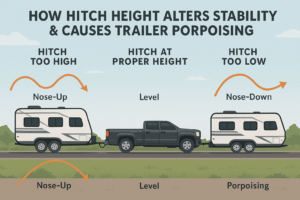
Among the many factors that influence safe towing, hitch height is one of the most overlooked. RVers often assume small changes don’t matter, but improper hitch height can dramatically affect stability, handling, and overall comfort on the road. One of the most common results of an incorrect setup is trailer porpoising—the front-to-back bouncing motion that makes towing stressful and unsafe.
Hitch height determines how level your trailer rides behind the tow vehicle. When a trailer isn’t level, weight shifts away from its intended balance point. This shift affects braking, steering authority, and axle load distribution, especially during long hauls to scenic destinations like Meadowlark Shores RV Resort.
When the hitch sits too high, it causes the trailer to ride nose-up. This lifts weight off the tow vehicle’s rear axle and places excess load on the trailer’s rear axle. A nose-up trailer tends to sway more easily and reacts poorly to crosswinds and passing trucks. It also increases stopping distance because weight is no longer distributed properly across the axles.
A hitch that sits too low has the opposite effect: it forces the trailer to ride nose-down. This puts undue pressure on the trailer’s front axle and shifts additional weight onto the tow vehicle’s rear suspension. Excessive downward force can overload the rear axle, compromise steering, and make the tow vehicle feel heavy or sluggish in corners.
Porpoising occurs when the tow vehicle and trailer fall out of sync in their suspension cycles. A nose-high or nose-low setup creates the perfect conditions for rhythmic bouncing, especially on uneven roads or bridges. Each bounce amplifies the next, creating a “see-saw” effect that is both uncomfortable and potentially dangerous.
Suspension dynamics also play a major role. When the trailer’s angle changes, its tongue weight changes too. A small drop or rise in hitch height can alter tongue weight by several percentage points, pushing it out of the safe 10–15% range. This shift magnifies porpoising and makes sway control devices less effective.
Weight distribution hitches help stabilize the system, but they can only correct so much. If the hitch ball is mounted too high or low, even the best weight distribution setup will struggle. Adjusting bar tension without correcting the root hitch height issue often leads to temporary fixes rather than long-term stability.
Speed further amplifies the problem. At highway speeds, aerodynamic forces push against the trailer. A trailer that isn’t level catches air unevenly, lifting or pulling at different points. This airflow imbalance contributes directly to porpoising on long stretches of interstate or open Florida highways.
Road conditions can intensify the effect. Bridges, dips, and expansion joints create vertical motion that a level, well-balanced trailer can absorb. But an off-angle trailer exaggerates these forces. Each bump jolts the system, causing the trailer and tow vehicle to oscillate against each other.
Tire pressure plays a subtle but important role. An unlevel trailer may overload certain tires, changing how they flex and absorb bumps. When the tires cannot evenly distribute road shock, porpoising becomes more pronounced. This uneven stress also reduces tire life and increases heat buildup.
Proper hitch height often requires adjustments after loading. Many RVers measure hitch height when the trailer is empty, then forget to recheck it once tanks, gear, and supplies are added for their getaway. A fully loaded trailer compresses the suspension differently, changing the angle enough to affect stability.
Correcting hitch height is one of the simplest ways to improve towing comfort and safety. By ensuring your trailer rides level, you minimize sway, reduce suspension stress, and prevent porpoising before it begins. The result is a smoother, more predictable towing experience—especially on the scenic routes leading to Meadowlark Shores RV Resort.
For RVers looking to improve handling, reduce fatigue, and maximize safety, taking the time to set hitch height properly is one of the smartest adjustments you can make. A level trailer means a safer journey, a more relaxed drive, and a confident arrival at your favorite riverfront destination.
📍1880 Williams Rd, FL
For any questions or concerns please reach out to us
📞 (863) 675-0006