

What Causes Soft Floors in RVs & How to Prevent Structural Damage
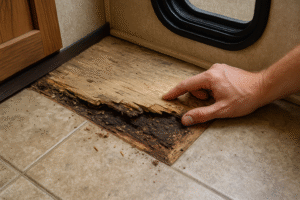
Soft floors are one of the most alarming problems an RVer can face. They often start subtly—an odd “give” under your step, a bouncy spot near the kitchen, or a sponge-like feeling around the bathroom. Left unaddressed, soft floors can lead to major structural damage. For seasonal and long-term guests at Meadowlark Shores RV Resort, understanding the causes and prevention strategies is key to keeping your RV safe, sturdy, and dry.
The most common cause of soft floors is water intrusion. RV floors are typically made of plywood or OSB sandwiched between vinyl and insulation. When water reaches the wood, it soaks in, weakens the fibers, and reduces structural integrity. Over time, the wood becomes spongy, swollen, or crumbles entirely. Water damage can spread far beyond where the leak originated.
Leaks often begin at predictable points: around sinks, showers, and toilets where plumbing fittings loosen or seals fail. Small drips you can’t see—like a slow leak under the bathroom—can saturate flooring for months before symptoms appear. Florida’s humidity accelerates the breakdown process, making early detection even more important for guests at Meadowlark Shores.
Roof leaks are another major cause. When sealant around vents, skylights, or AC units cracks, rain can drip down interior walls and eventually reach the subfloor. Because the water travels behind paneling, the floor may be the first place you notice symptoms of roof failure. Regular roof inspections help prevent this hidden form of damage.
Slide-outs also contribute to soft flooring. Worn wiper seals, cracked slide toppers, and poorly aligned slide rooms allow water to pool or run along edges. When water enters around the slide floor, it often saturates the wood beneath the vinyl. For RVs with flush-floor slides, even a small leak can cause extensive hidden damage.
Condensation is an overlooked culprit, especially in humid climates. When warm, moist air meets cool flooring, condensation forms on or below the surface. Over time, this moisture encourages rot, mold, and swelling. Running dehumidifiers, especially in Florida’s climate, can greatly reduce this risk.
Underbelly damage is another cause of soft floors. If the coroplast (the plastic sheeting under the RV) sags, tears, or fills with water from road spray or rain, moisture can soak upward into the floor. A compromised underbelly acts like a sponge, holding water against the wood for days or weeks at a time.
Delamination of floor materials can also occur without visible water. Heat, weight, and age weaken adhesives, causing layers to separate. While less common, this can happen in high-traffic areas like entryways or kitchens where flexing is frequent.
Preventing soft floors starts with routine inspection. Look for discoloration in vinyl flooring, bubbling, uneven spots, or areas that feel warmer or cooler than the rest of the floor. Press down gently with your foot—if it sinks or bounces, you may have early-stage damage. Catching problems at this stage is the difference between a small repair and a full floor replacement.
Maintaining seals is essential. Inspect roof seams, window caulking, slide-out seals, and plumbing connections regularly. Re-coat or replace sealants as soon as cracks appear. Florida’s UV intensity causes sealants to dry out faster, so Meadowlark Shores guests benefit from inspecting seals every few months.
Proper ventilation prevents condensation and moisture buildup. Running exhaust fans when showering or cooking, keeping windows cracked during mild weather, and using a dehumidifier significantly reduce moisture exposure inside the RV. Lower humidity also protects insulation, cabinetry, and furniture.
Protective measures like entry mats, drip trays under sinks, and waterproof barriers under appliances help catch small leaks before they reach the subfloor. For long-term stays, many RVers place rugs or runners in high-traffic areas to distribute weight and reduce flex stress.
Ultimately, soft floors don’t happen overnight—they develop from unnoticed moisture, aging materials, or gradual wear. By understanding how water enters the RV and staying proactive with maintenance, RVers can prevent soft floors and protect the structural integrity of their home-on-wheels at Meadowlark Shores RV Resort.
📍1880 Williams Rd, FL
For any questions or concerns please reach out to us
📞 (863) 675-0006