

Understanding Your RV Electrical System: What New RVers Often Misunderstand
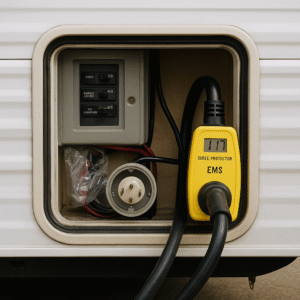
For new RV owners, the electrical system is one of the most confusing parts of RV life. Between shore power, batteries, converters, inverters, generators, and different plug types, there’s a lot to learn—and misunderstandings can lead to blown breakers, damaged appliances, or safety hazards. Understanding the basics helps you enjoy reliable power whether you’re parked at Cape Kennedy RV Resort or traveling across the country.
The first big misconception is assuming RV electrical systems work like a sticks-and-bricks home. RVs actually run two systems at once: 120-volt AC power (like a house) and 12-volt DC power (like a car). The AC system powers big appliances like the microwave and air conditioner, while the DC system runs lights, fans, and control boards.
Another common misunderstanding is plug compatibility. Many new RVers don’t realize that 30-amp and 50-amp RVs are not interchangeable. A 30-amp RV can pull a maximum of 3,600 watts, while a 50-amp RV can access up to 12,000 watts. Plugging into the wrong outlet with a cheap adapter can overload the system or trip the pedestal.
Batteries are another point of confusion. New RVers often think their batteries only matter when boondocking, but your 12-volt system runs even when connected to shore power. Your converter charges the battery while simultaneously powering your DC circuits. A weak battery can cause dim lights, flickering slide-outs, or furnace issues.
Inverters are also misunderstood. Many RVers believe their inverter powers the whole rig, but most stock inverters only run a few outlets. They convert battery power (DC) into usable AC power—but only if your RV is wired that way. Knowing what your inverter actually supports helps avoid frustration.
Another misconception is assuming campground power is always perfectly regulated. In reality, voltage can drop during peak heat when everyone is running their air conditioners. Low voltage is dangerous—it can burn out your A/C compressor or damage appliances. Using a surge protector with EMS (Electrical Management System) protects your RV by shutting down power when voltage becomes unsafe.
Extension cords are another source of trouble. Household cords aren’t designed to carry RV-level current and can overheat or melt. Only heavy-duty RV-rated cords and adapters should be used, especially in humid coastal climates like Florida’s.
Many new RVers also misunderstand breaker behavior. If an appliance suddenly stops working, they often assume it’s broken—but in many cases, a tripped breaker or GFCI outlet is the real cause. Learning where your breaker panel is and checking it regularly prevents unnecessary repairs.
Air conditioners are huge power consumers. A common misconception is thinking an RV can run everything at once. In a 30-amp rig, running the microwave, A/C, and water heater simultaneously will almost always trip the breaker. Power management—running appliances one at a time—is essential.
Another key concept is shore power polarity and grounding. Faulty wiring in an old pedestal can pose a safety risk. A smart surge protector tests for open grounds, reverse polarity, and unsafe voltage before allowing electricity into your RV.
Generators also confuse many new RVers. Some assume their generator charges the batteries automatically or powers every outlet, but that depends heavily on wiring. Reading your RV’s electrical schematic—or at least understanding what your generator supplies—is crucial for safe use.
Ultimately, understanding RV electrical basics prevents costly mistakes and ensures a smoother camping experience. When you know how your system works, you avoid overloads, protect your appliances, and stay safe on the road. Whether you’re a weekend traveler or planning a long stay at Cape Kennedy RV Resort, mastering your RV’s electrical system gives you confidence every time you plug in.
📍1880 Williams Rd, FL
For any questions or concerns please reach out to us
📞 (863) 675-0006