

RV Awning Safety: Avoiding Damage from Wind, Rain & UV
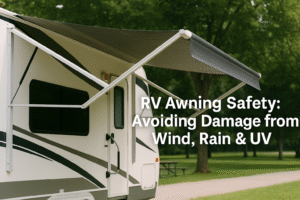
Your RV awning is one of the most useful outdoor features you have—it creates shade, protects you from the elements, and turns your campsite into a comfortable outdoor living space. But awnings are also one of the most commonly damaged RV components. Wind, rain, and UV exposure can ruin an awning in minutes if it’s not used properly. Whether you’re staying short-term or enjoying a long seasonal visit at Cape Kennedy RV Resort, following key safety practices protects both your awning and your RV.
One of the biggest threats to awnings is wind. Even a light breeze can begin lifting and shaking an extended awning. As wind speed increases, the awning acts like a giant sail, pulling on its arms and hardware. Many RVers underestimate how quickly wind can turn dangerous—gusts don’t need to be strong to cause damage. If the awning flaps, lifts, or jolts, it’s time to retract it immediately.
Awnings should never be left out when you’re away from your RV, even for a short walk. Florida’s coastal weather can change in minutes, and a single gust can bend awning arms, rip fabric, or even detach the entire assembly. At Cape Kennedy RV Resort, where afternoon breezes and sudden storms are common, retracting your awning before you leave is one of the smartest habits you can develop.
Water is another major concern. Awnings may seem like rain protection, but they are not designed to hold standing water. When rain pools on the fabric, the weight increases rapidly—sometimes by dozens of pounds in just a few minutes. This can cause fabric stretching, tearing, or collapse. If you expect rain, always lower one awning arm to create a steep angle for runoff.
Extended awnings also face long-term damage from UV rays. Florida’s sunshine is beautiful but harsh, and prolonged UV exposure can fade fabric, weaken stitching, and make material brittle. Retracting the awning when it’s not in use dramatically increases its lifespan. Many RVers also apply UV protectant sprays or upgrade to more UV-resistant fabrics to maintain their awning’s appearance and strength.
Another good practice is to inspect your awning regularly, especially during seasonal stays. Check the fabric for small tears, loose stitching, or thinning areas. Inspect hardware for rust, loose bolts, or bent arms. Catching small issues early prevents major damage and saves you from expensive replacements down the road.
Keeping your awning clean also plays a big role in overall durability. Dirt, pollen, moisture, and debris can build up, leading to mold and staining. A gentle cleaning solution and soft brush help maintain the material. At Cape Kennedy RV Resort—where coastal humidity can encourage mildew—cleaning your awning a few times a season helps keep it in great shape.
Proper tensioning is another key part of awning safety. Electric and manual awnings must be fully locked in place to prevent sagging or movement. Loose arms or partially extended awnings flap in the wind and wear out quickly. Ensuring everything is secure each time you open the awning gives you stability and peace of mind.
For RVers who want additional stability, awning tie-downs or deflappers can help. These accessories reduce fabric movement during mild breezes, but they are not substitutes for retracting your awning in bad weather. Tie-downs provide extra support, but in high winds, retracting is always the safest option.
Rainstorms, especially Florida downpours, can arrive suddenly. If you hear thunder, see dark clouds, or feel wind shift direction, retract your awning—even if the storm feels far away. Awnings are one of the quickest RV components to fail during storms, and reacting early prevents major damage.
When retracting your awning after rain, make sure it dries fully before storing it long-term. Rolling up a damp awning traps moisture, leading to mildew and foul odors. A quick wipe-down or allowing it to air out in the sun helps prevent mold growth, which is common in humid climates like the Space Coast.
Finally, always follow your awning manufacturer’s manual. Each awning type—manual, electric, or automatic—has specific instructions for safe operation. Understanding how your model behaves in different weather conditions helps you make smarter decisions and extend the life of your equipment.
By practicing proper awning safety, you protect one of your RV’s most valuable outdoor features. At Cape Kennedy RV Resort, where sun, breeze, and tropical rain showers are part of daily life, these simple habits ensure your awning stays beautiful, functional, and damage-free all season long. Smart awning care leads to stress-free relaxation—so you can sit back, enjoy the shade, and take in everything the Space Coast has to offer.
📍1880 Williams Rd, FL
For any questions or concerns please reach out to us
📞 (863) 675-0006